PostHeaderIcon Introducing our project at dorkbot Aachen

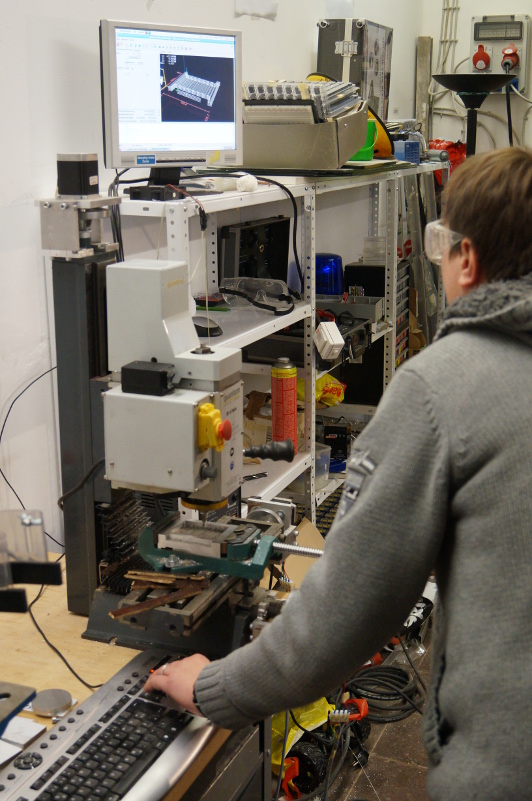
At the 31st dorkbot meeting in Aachen, we introduced our project to the dorkbot community.
It was a spontanious action so we did not have an external microphone. Hopefully you can get some interesting information from this presentation.


PostHeaderIcon 3D Print of the structure

The 3D-print of our space probe structure is finished. Rapid prototyping allows us to test the entire engineering model including all internal components before aquiring an aluminium skeleton.

Many thanx to Fablab-Aachen for the production of these parts.
We are using the Compass1 structure design for our model. Compass1 is a project of the FH-Aachen and is orbiting our planet since 2008. We will use the structural model for mounting and testing our components.

PostHeaderIcon New subsystem evaluation boards

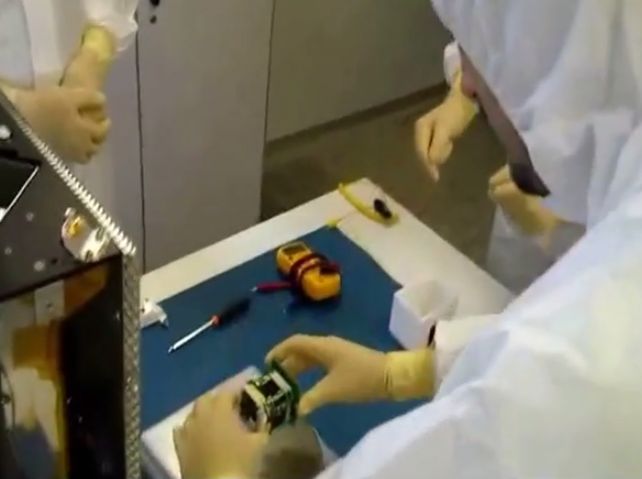
New evaluation boards of various subsystems are ready. From left to right:
Solar charge controller, 12V-Boost-Converter for radio power stage and valves, source drivers, motor controller for reaction wheels, radio transceiver

PostHeaderIcon RCS & IMU module (rotation/acceleration/reaction control subsystem)

Rotation rate estimation for our RCS+IMU (reaction control system/inertial measuring unit)
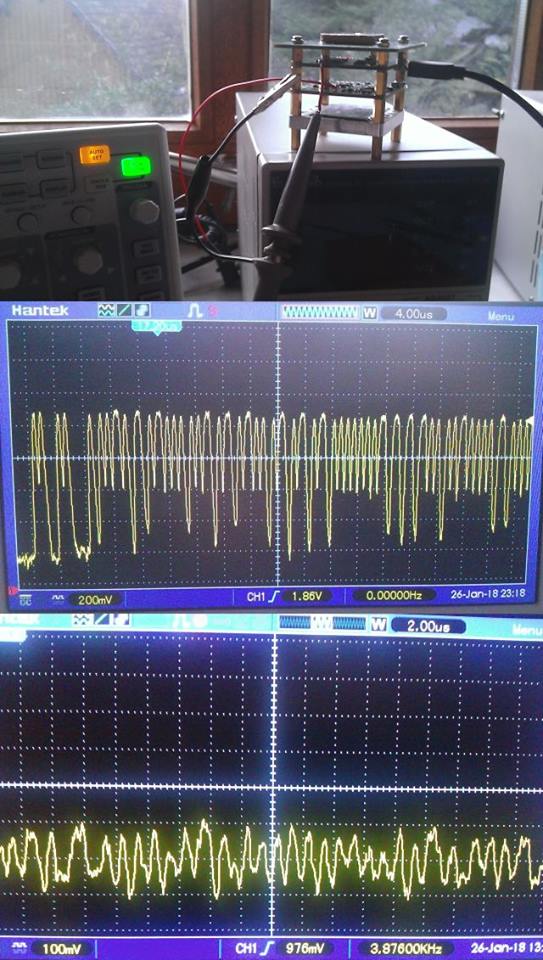
The module includes a 3-axes rate gyro, 3-axes accelerometer and control hardware for microthrusters.
It will work together with the optical navigation module, reaction wheels and thrusters beeing able to determine its attitude and position in space, tracing its flight path and perform desaturation and midcourse corrections.
Fixed point arithmetic on quaternions and kalman filters will be used for fast and accurate calculations. (Paul Kocyla Sep2011)

PostHeaderIcon Lecture on Plasma Electrolysis Propulsion

Desktop Delta-V workshop in Providence, RI

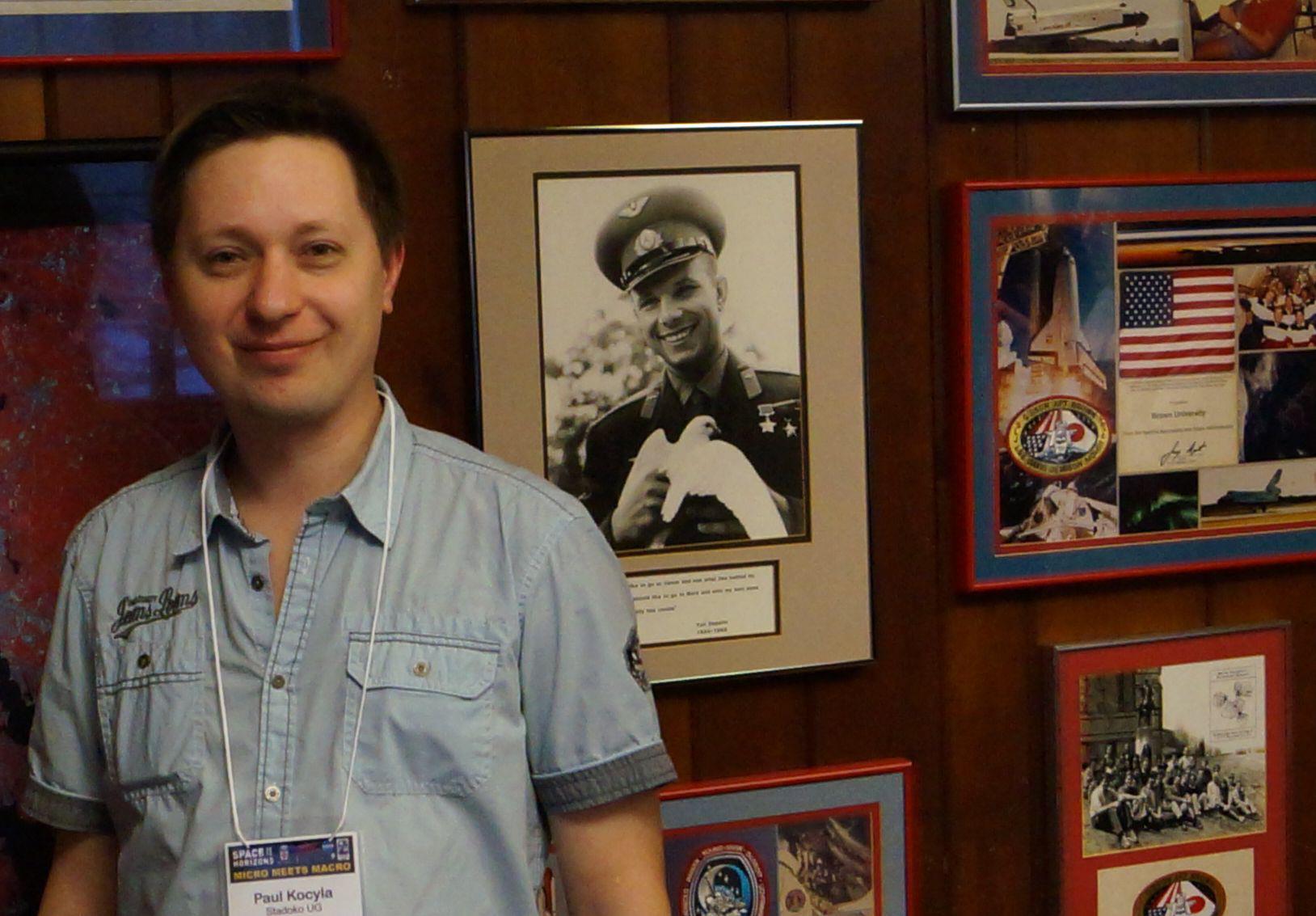
Paul Kocyla joined the Desktop Delta-V workshop this year. The topic was safe propulsion for small spacecrafts.
He gave a lecture on plasma electrolysis propulsion for cubesats.

PostHeaderIcon Optical Navigation Module V2.0

Navigation module prototype v2.0

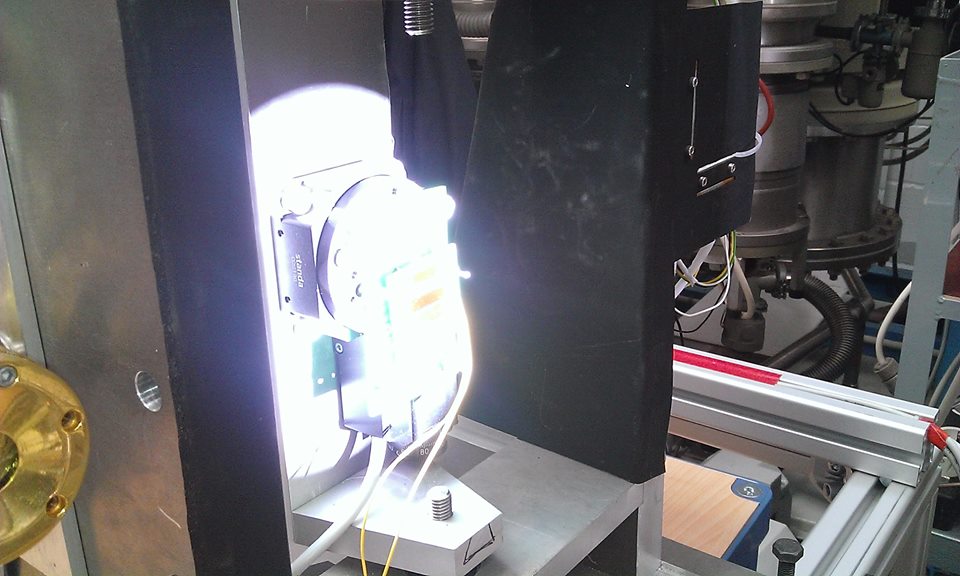
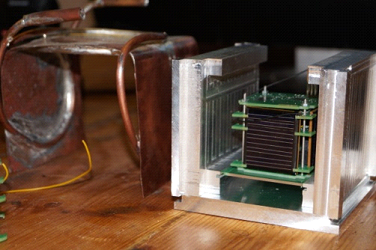
The next navigation module prototype is ready for testing under real space conditions. This includes high vacuum, radiation, sunlight exposure and a shaking test to simulate forces during the launch.
The module is an embedded camera system with fast algorithms for determining the position of the sun and planets“ horizons for estimation of attitude and position in space. Star tracking tests are pending.
A monitoring board (right side) is connected to the module to measure the temperatures of the module“s components and all system voltages and currents. (10 Sep. 2011, Paul Kocyla)

PostHeaderIcon Navigation Module Prototype

succesfully tested in high vacuum

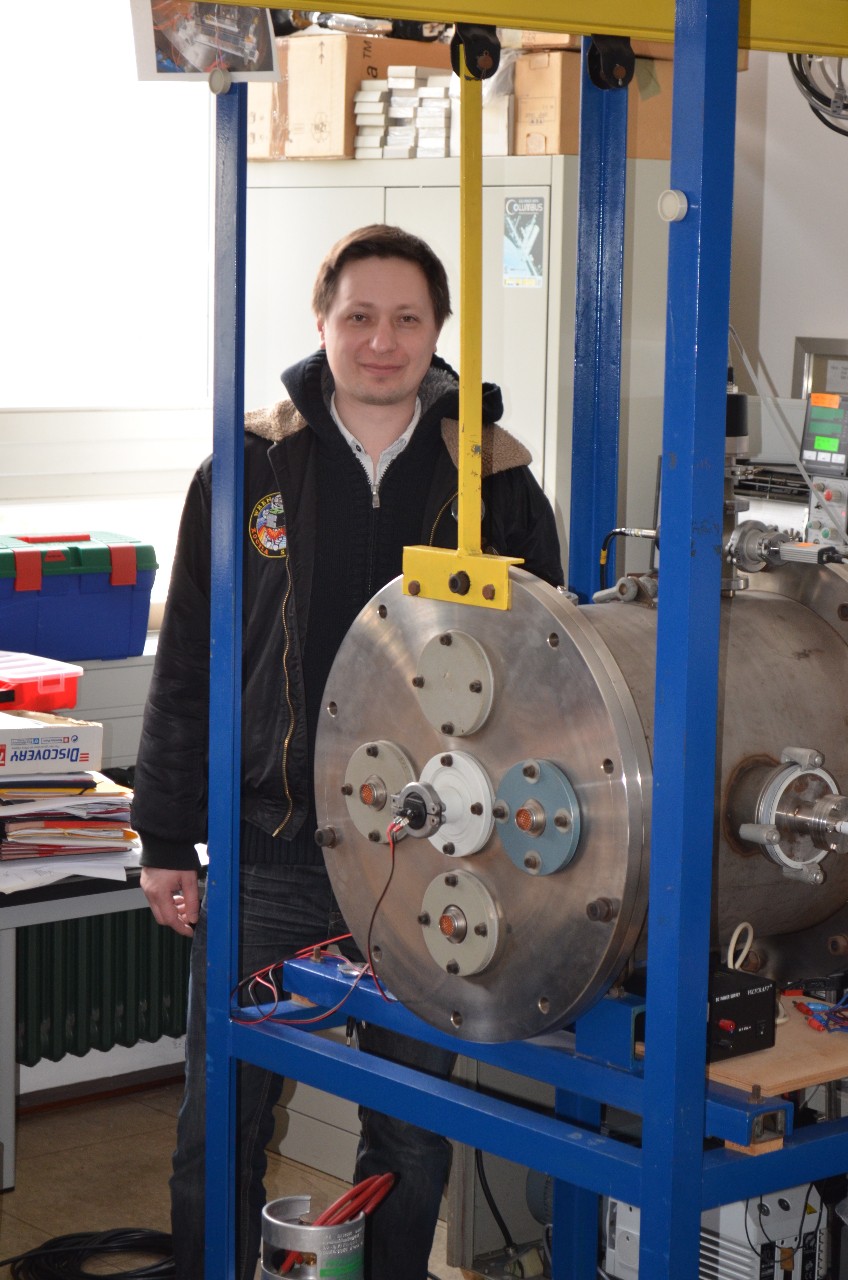
First navigation module prototype has been tested in the vacuum chamber and survived without any problems.

Search
Categories
Links: